Resources
Brands allow companies to differentiate themselves from competitors and create a unique identity in the minds of consumers. Effective brand management involves developing and maintaining a strong brand image, which can lead to increased customer loyalty, higher perceived value, and competitive advantage.
Branding
Branding has different functions for different perspectives.
For brand leaders, it allows them to differentiate from competition, develop customer loyalty, create barriers for competitor market entry, generate a price premium, and ease introduction of own new products. For marketing intermediaries, it reduces their own sales risk, positive brand image might be transferred to the intermediary, and limits their own consulting costs. For customers, branding reduces search and evaluation costs, creates a sense of trust and quality, and provides a self-expressive function.
Effects on the 4 P’s
- Product: Brand name has a positive effect on consumers’ product evaluation, and a strong brand can facilitate the introduction of new products.
- Price: Strong brands can command a price premium, as consumers perceive higher value and quality. Brand leaders are influenced less by price competition, and households that are loyal to a brand show lower levels of price elasticity.
- Place: Strong brands can influence distribution channels, as intermediaries are more likely to carry and promote well-known brands. This can lead to better shelf placement and increased visibility in retail environments.
- Promotion: Branding can enhance the effectiveness of promotional activities, as consumers are more likely to respond positively to
Cognitive Modelling
The Associative Network Memory Model visualizes how consumers store and retrieve information about brands. Nodes represent concepts, such as brand attributes or benefits, and links represent associations between them. For example, for the McDonald’s brand, these associations could be price, taste, unhealthy, fast, etc.
Market-Structure Surveillance can be done using text mining, which extracts useful information from online user-generated content without relying on customer surveys or interviews.
Brand Positioning
The act of designing a company’s offer and image to occupy a distinct place in the minds of the target market. It involves identifying the unique value proposition of the brand and communicating it effectively to consumers. Brand positioning helps create a clear and differentiated brand image, which can influence consumer perceptions and preferences.
Brand positioning manages Points of Parity (PoP, attributes that are shared with competitors) and Points of Difference (PoD, attributes that differentiate the brand from competitors). Effective brand positioning requires a deep understanding of the target market, competitive landscape, and the brand’s unique strengths and values.
Brand Equity
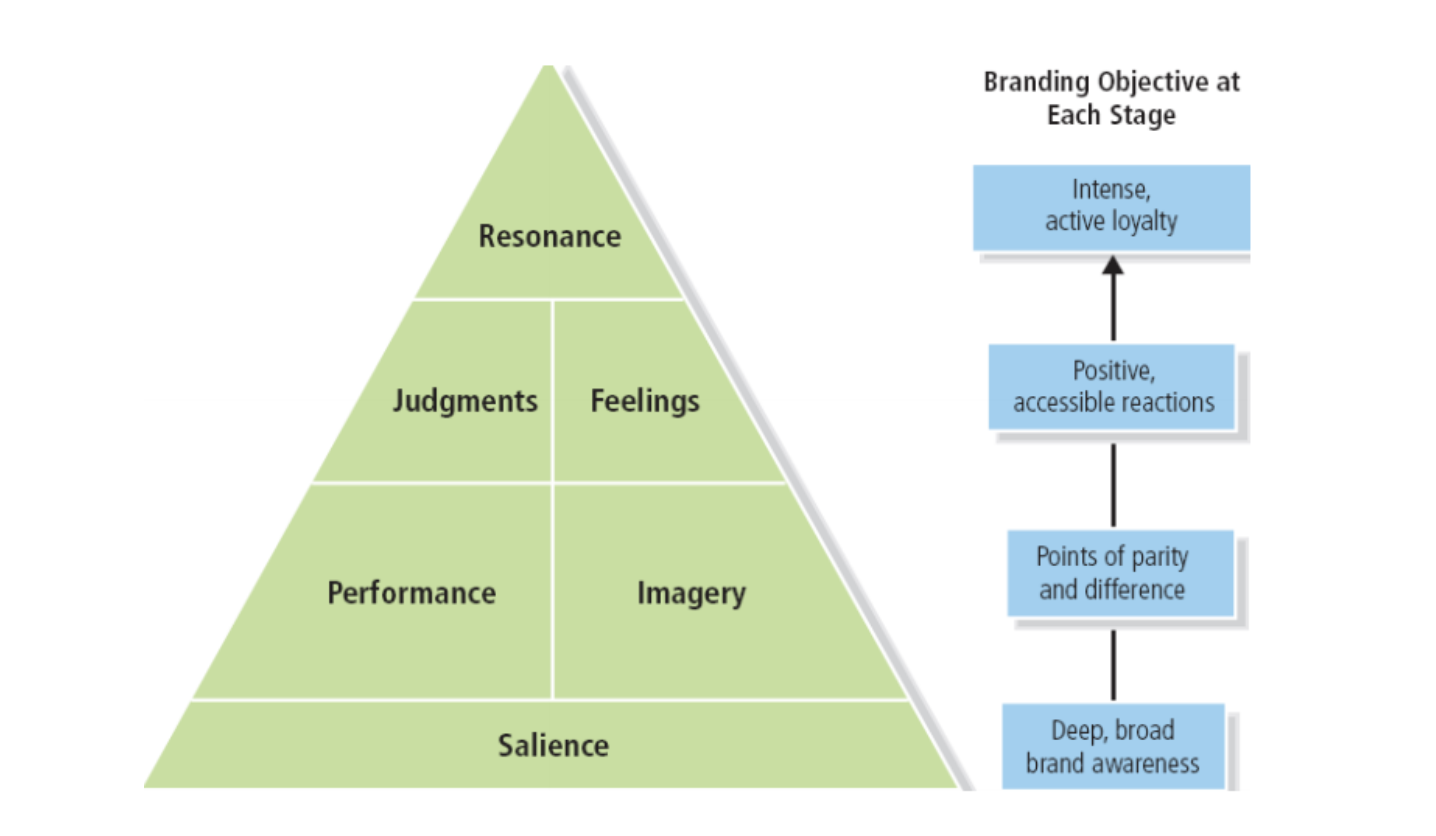
Brand equity provides a common denominator for interpreting marketing strategies and assessing the value of a brand. The Customer Based Brand Equity (CBBE) stresses that the power of a brand lies in what resides “in the minds and hearts of customers”.
The CBBE model consists of four stages:
Brand Salience
Consumer’s question: Who are you?
The branding objective at this stage is to create broad brand awareness; influencing how likely it is for a brand element to come to mind. For many companies, the key question is not whether consumers know about the brand in general, but where, when, how easily, and how often they think of it.
Brand Performance and Imagery
Comsumer’s question: What are you?
Here, the branding objective is to create points of parity and difference with competitors. Performance refers to how well the product or service meets customers’ functional needs (e.g., reliability, durability, serviceability), while imagery refers to the brand’s ability to meet customers’ psychological or social need (e.g., prestige, self-expression, social approval).
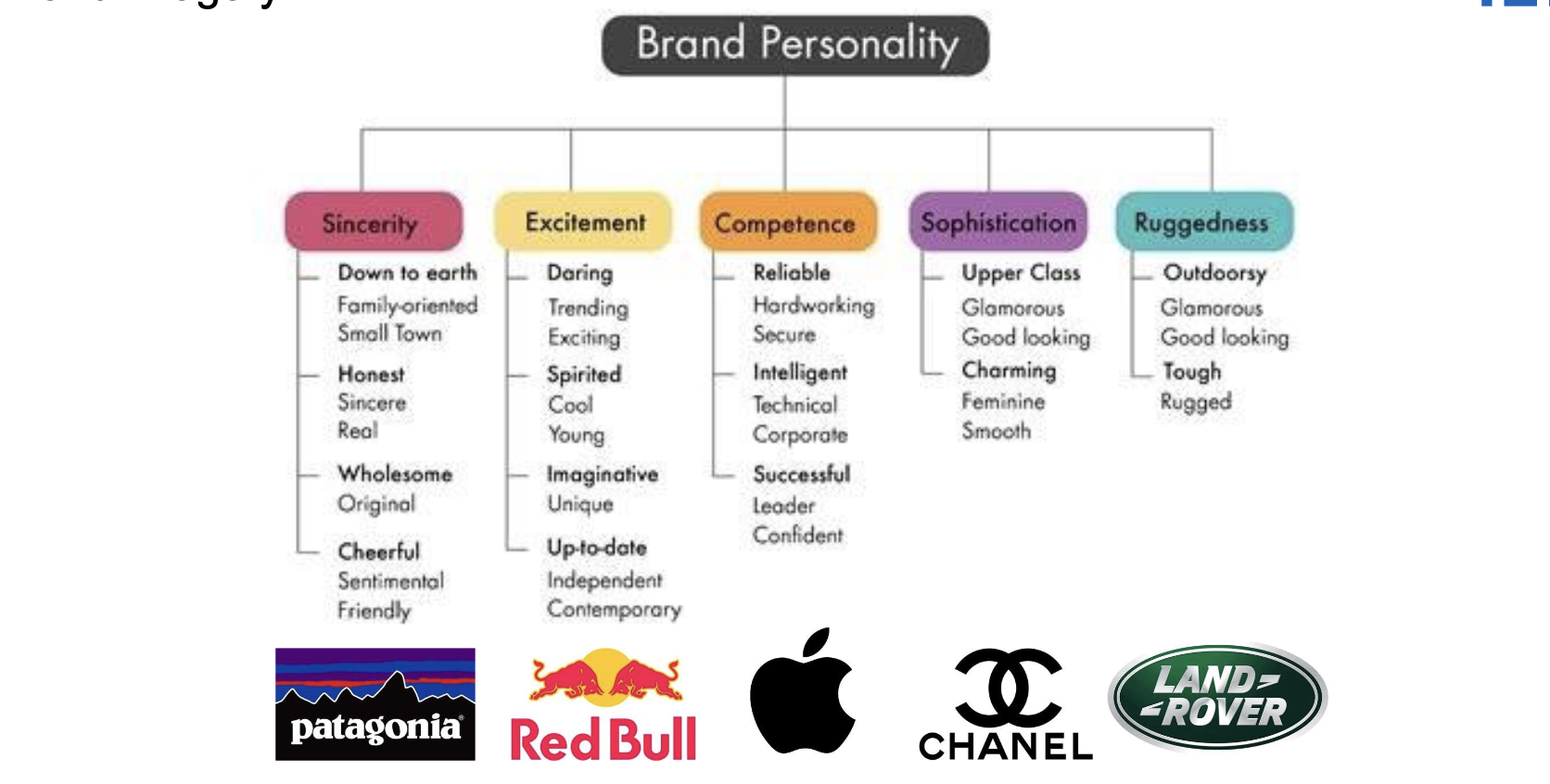
The imagery is strongly influenced the brand personality: its sincerity, excitement, competence, sophistication, and ruggedness.
Brand Judgements and Feelings
Consumer’s question: What about you? What do I think and feel?
In this stage, the brand’s objective is to elicit positive, accessible reactions.
- Brand judgements may be quality; credibility; consideration; or superiority.
- Brand feelings may be warmth; fun; excitement; security; social approval; or self-respect.
Brand Resonance
Consumer’s question: What about you and me? How much of a connection do we have?
Finally, the brand should foster an intense, active loyalty relationship with customers. This can be measured through behavioral loyalty (repeat purchases), attitudinal attachment (emotional connection), sense of community (shared values and experiences), and active engagement (participation in brand-related activities).