Resources
Eden Chabanet
Eden grew up around machines and wanted to become an engineer growing up. She did, but then realized her excitement about software and pivoted. During her work experience, she learned to fail fast and break things. Together with her colleagues at Kuka, she launched a low-code platform for robotics to enable non-technical users to program robots. She learned that many decisions in corporate environments are political and to discern between what’s in her control and what is not.
Living in Paris, she joined Station F. She joined and launched a few startups that ultimately failed and learned to not be afraid of jumping burning ships. She again joined corporate at Bosch to bring open innovation to the company – however, the corporate processes often killed the startups their acquired.
Later, she moved to Germany to build Arctory.
Arctory
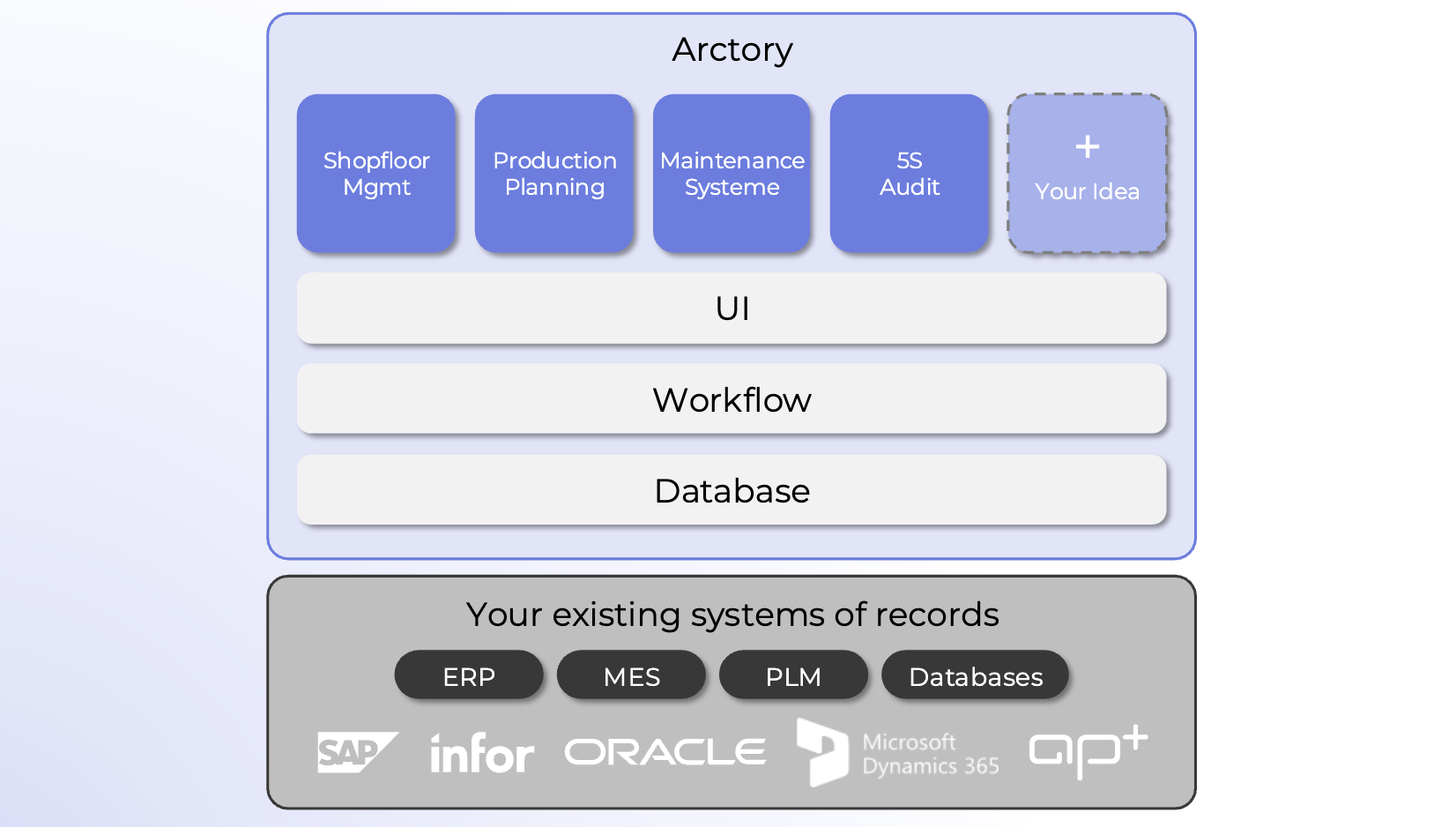
Arctory is the Lovable for manufacturing: a natural language solution to building ERP-connected production-specific software, to save on software engineering costs and months of time when building specific solutions.
You cannot sell something that you do not believe in
She stresses that there is not one single ingredient for a successful innovation venture. You need to work on something that you’re excited about, and start with the problem – not the solution.
The core problem Arctory solves is integration. Every company already has their data on all kinds of things, but integrating these data sources is a pain point. 70% of companies still run on Excel or paper. Their beachhead market is machinery and equipment manufacturing because these have a lot of processes that change for every product.
In addition to the AI-built software, Arctory fundamentally improves the deployment process. Instead of stopping the entire production (which is expensive) because a single component of the entire software stack has been updated, Arctory uses a modular approach.
Motivations for Digitalization
5 Times Why
In manufacturing, the 5x why framework is used to understand the root cause of problems: Simply ask Why 5 times.
The primary motivation is Cost: EBIT for machinery has been negative for 3 years straight. China is going digital and taking more market share. Labor costs are rising, and companies need to be more efficient.
Hurdles
The largest hurdle when reaching out to customers is to convince them to share their data with an external solution. Industrial companies own massive amounts of data that would also be valuable to train industrial AI model on, but they are highly protective. Each company has its own processes that might contribute to an unfair advantage.
AI software startups no longer have a moat – they have to work on distribution and infrastructure
Founder-Market Fit
Eden spoke about the importance of founder-market fit: Founders should be excited about what they’re building, but they should also be qualified to build it.
You have to find yourself, your reasons and motivation. Then, get people in your boat. You’re not gonna make it alone, but if you have the vision, make people identify with it.
First Customers
Oelde makes industrial machines for the food industry. They were one of Arctory’s first customers, when the digitalized the shopfloor management meeting (like a daily standup). They were looking for a solution for a new customer project (these machines are long-term projects).
In B2B, you have to be part of your customer’s story; of their success, to be recognized.
They offered workshops for relatively cheap (3.5k) that managers could simply buy without corporate approval, which prove Arctory’s value and pave the path towards a pilot project and eventual multi-plant rollout.